Dogs groom their feet, and a short session after a walk is normal. Licking that goes on for long periods, happens daily, or leaves the fur wet is different — and the first useful question is how many paws.
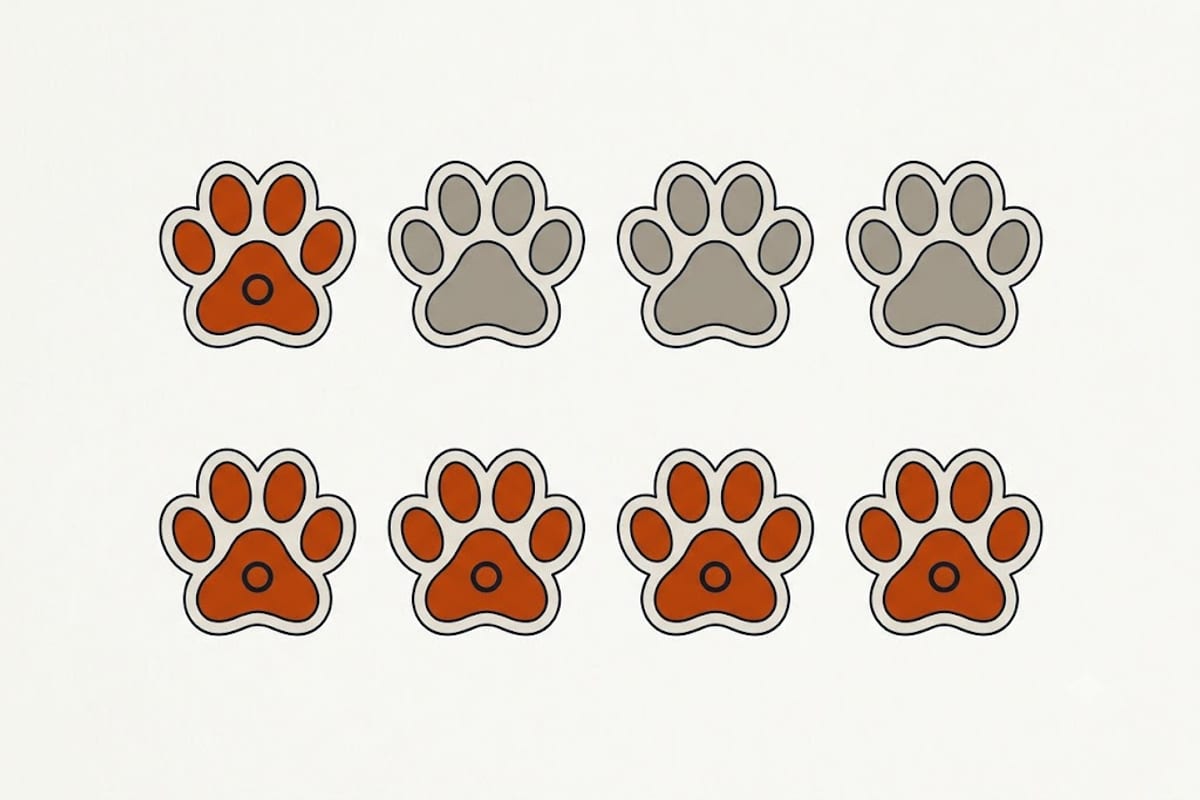
One paw
Something is wrong with that foot. Look at it in good light, and look between the toes and pads, not just on top.
- A cut, a thorn, or a grass seed. Grass seeds are a specific and underrated problem: they work through the skin between the toes and can travel, and they often show as a small swelling with a weeping hole.
- A broken or overgrown nail, or a nail bed infection.
- A cracked or burnt pad. Hot pavement in summer and salted pavement in winter both do it.
- Something stuck between the pads — grit, chewing gum, a lump of ice.
- Pain elsewhere in that leg. Dogs sometimes lick over a joint that hurts, so a dog licking a wrist or a foot with no visible injury may have an arthritic joint above it.
If a single paw is licked persistently and looks normal, it still warrants a vet look — grass seeds and joint pain both hide well.
All four paws
Now it is systemic, and allergy is the most common answer by a wide margin.
- Environmental allergy. Pollen, dust mites, grass. Feet, ears, belly and armpits are the classic distribution, and it is often seasonal.
- Food allergy or intolerance. Less common than owners assume, but it produces the same picture and does not follow seasons.
- Contact irritation — lawn treatments, floor cleaners, de-icing salt.
- Yeast or bacterial overgrowth between the toes, which usually starts as a consequence of the licking and then becomes its own problem. A distinctive musty smell is the giveaway.
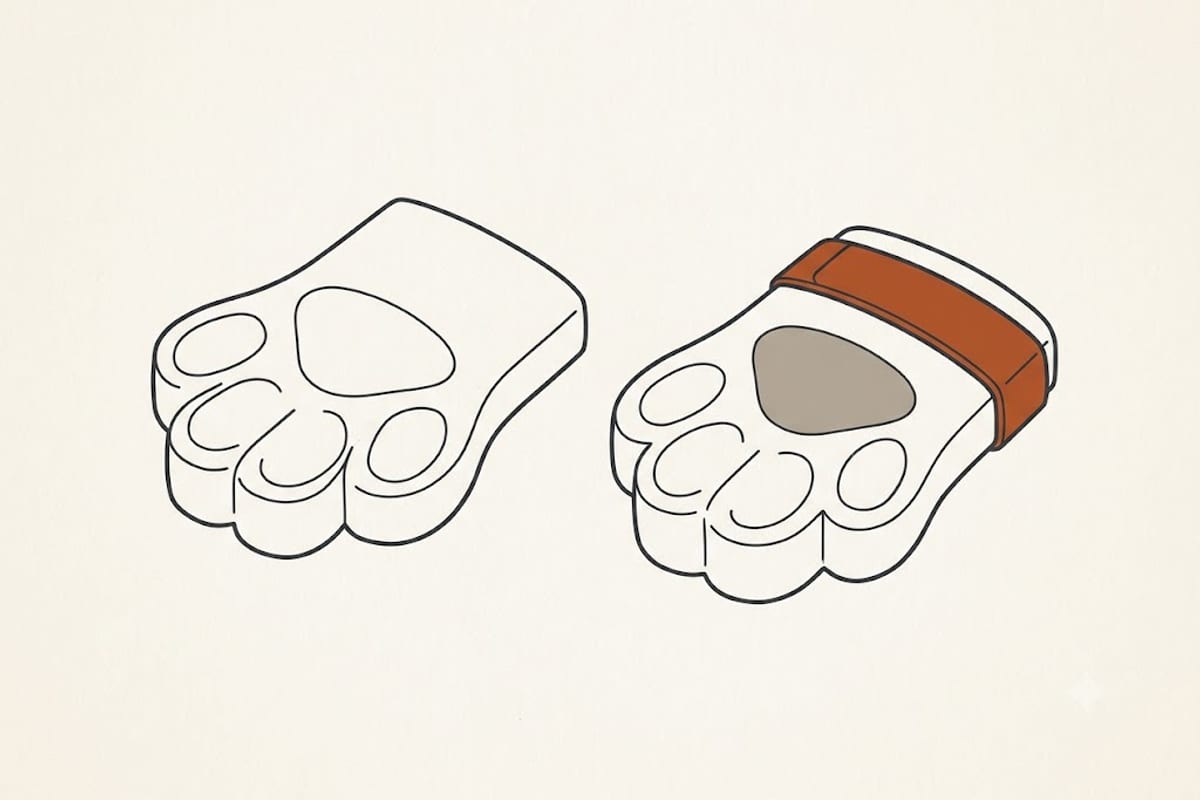
On pale-coated dogs, persistent licking stains the fur a rust or pink colour. That stain is a useful record: it shows how long it has been going on, even on a day the dog is not doing it.
When there is nothing to find
If the vet has ruled out injury, infection and allergy, licking can be behavioural — boredom, anxiety, or a habit that outlasted its original cause. It is much less common than owners think, and it is a diagnosis of exclusion rather than a first assumption.
Signs that point this way: licking mainly when the dog is left alone or settling down, no skin change beyond the licking damage, and a dog that stops when engaged.
Worth a vet appointment
- Licking that has gone on more than a few days.
- Any swelling, redness, discharge, or smell.
- Limping as well.
- The dog cannot be interrupted — it goes back immediately.
- Bleeding, or a raw patch developing.
Raw patches escalate quickly. A licked spot becomes infected, the infection itches, the dog licks more. Breaking that loop usually needs treatment rather than time.
What not to do
- Do not use human antifungal or steroid creams unless a vet has said to. Dogs lick them off, and some are harmful swallowed.
- Do not put a sock on it and wait. Covering a foot traps moisture, which suits yeast very well.
- Do not assume it is boredom without a physical check first.
Small things that help while you wait
Rinse and dry the feet after walks, particularly in pollen season and on salted pavements. Dry properly between the toes — damp fur between toes is where yeast starts.
This page describes what paw licking can indicate. It is not a diagnosis, and persistent licking with any swelling, smell or discharge needs a vet.