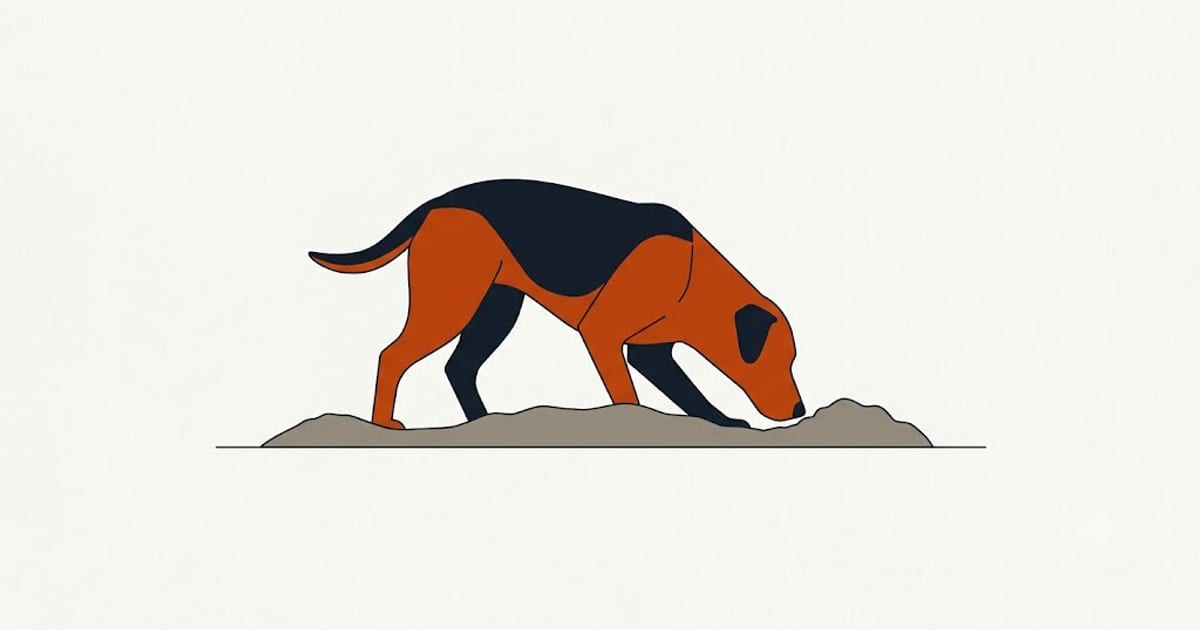
Dogs investigate the world with their mouths, and soil is interesting: it smells of other animals, of decaying matter, and sometimes of food. A mouthful now and then is not a symptom.
What matters is whether it is casual or driven.
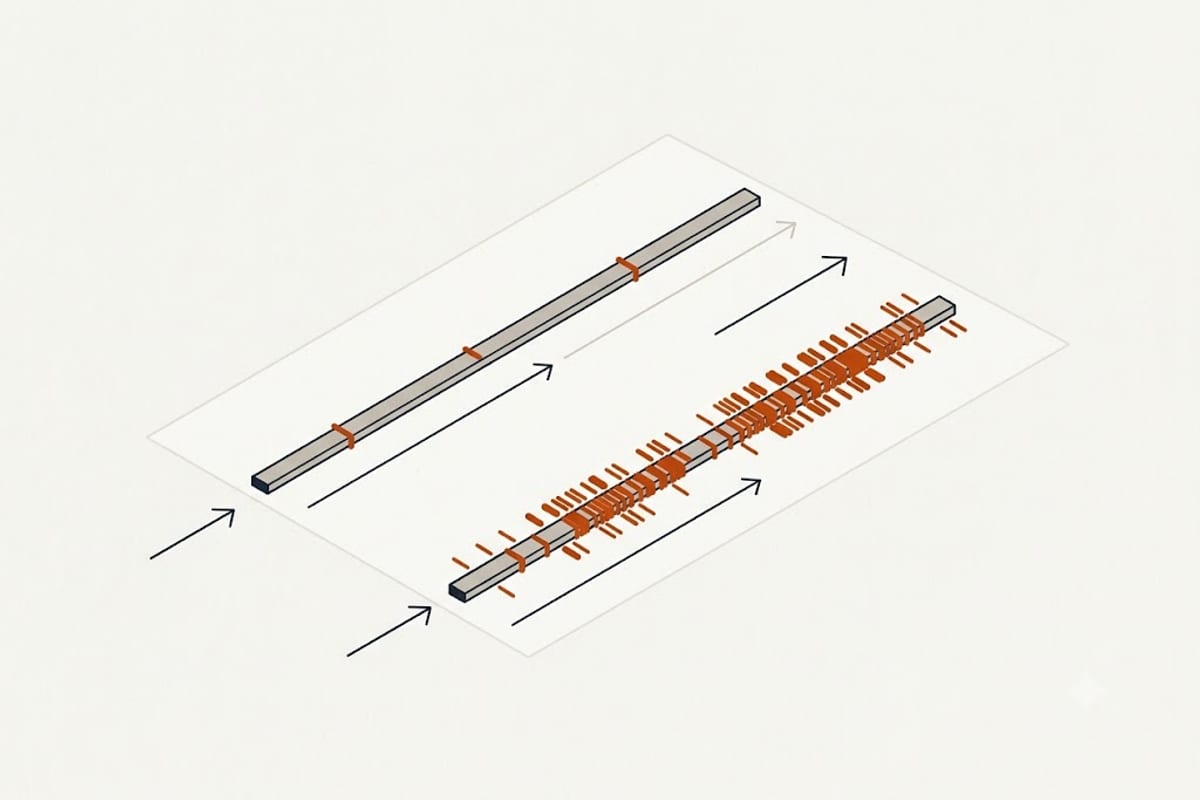
Casual
A sniff, a lick, a mouthful during a walk, then moving on. Usually boredom, curiosity, or something that smelled worth investigating. Common in puppies, who mouth everything.
Driven
Seeking soil out, eating it steadily, returning to the same spot, doing it daily. That belongs on the list below.
Pica, and the reason it is taken seriously
Persistent eating of non-food items is called pica, and in dogs one association is worth knowing: anaemia. Dogs with low red blood cell counts sometimes develop a strong drive to eat soil, and it can be one of the earlier owner-visible signs.
The check takes seconds. Lift a lip and look at the gums. They should be pink and moist. Pale, white, or greyish gums with persistent dirt eating warrants a same-day vet visit, and blood loss from parasites, ulcers or other causes is on the list of reasons.
Other things that can drive it:
- Gastrointestinal discomfort — some dogs eat soil when nauseous, in the same way they eat grass.
- Mineral deficiency, uncommon in dogs fed a complete diet but possible on homemade or unbalanced diets.
- Malabsorption, where a dog eats normally but takes up nutrients poorly. Usually with weight loss and abnormal stools.
- Boredom and under-stimulation, which is the most common explanation of all in an otherwise well dog.
- Anxiety, particularly when it happens when the dog is left alone.
The practical risks
Regardless of cause, eating soil carries real hazards:
- Intestinal obstruction, particularly if stones or large clumps are swallowed. This is the one that becomes an emergency.
- Parasites and bacteria in soil, including roundworm eggs which can persist for years.
- Garden chemicals — fertilisers, herbicides, slug pellets. Metaldehyde in slug pellets is highly toxic and is often exactly where a dog would dig.
- Toxic plant material and bulbs mixed into the soil.
- Tooth wear and fractures from grit and stones.
When to call the vet
- Pale gums, lethargy, or weakness alongside it
- Weight loss, or a poor coat
- Vomiting or diarrhoea, especially with blood
- The behaviour is new and determined in an adult dog
- Any suspicion that stones have been swallowed
- Any chance of garden chemical exposure
If the dog is well
Treat it as a management problem.
- Increase exercise and mental work. Sniffing walks, scent games and food puzzles reduce the drive to seek out other stimulation.
- Supervise in the garden and interrupt calmly rather than punishing, which usually just makes the dog do it out of sight.
- Fence off favourite digging spots, or provide a sanctioned digging area.
- Stop using treatments on lawns the dog uses, or keep them off treated areas for the stated interval.
- Check the worming schedule is up to date.
This page is background. A dog eating soil persistently, with pale gums or weight loss, needs a vet rather than a behaviour plan.
Puppies are a special case
Puppies mouth everything, and soil is no exception. Most of it is exploration rather than a symptom, and most puppies grow out of it.
Two things make it worth watching more closely in a puppy than in an adult. First, puppies are far more likely to swallow something that causes an obstruction, because they have less judgement and smaller intestines. Second, puppies carry roundworms very commonly, and soil is where roundworm eggs persist — so a puppy eating dirt and not being wormed to schedule is a genuine concern rather than a theoretical one.
Interrupt calmly, redirect to something else, and keep the worming schedule tight. Do not chase — a puppy that learns being chased is a game will eat things faster to keep the game going.
Faeces rather than soil
Coprophagia — eating faeces — is a related but distinct behaviour, and it is much more common than owners expect. It has its own list of causes and, unlike soil eating, it is very rarely a sign of deficiency in a dog on a complete diet.
The practical management is the same in both cases: pick up promptly, supervise, interrupt without drama, and give the dog enough to do that scavenging is not the most interesting option available.