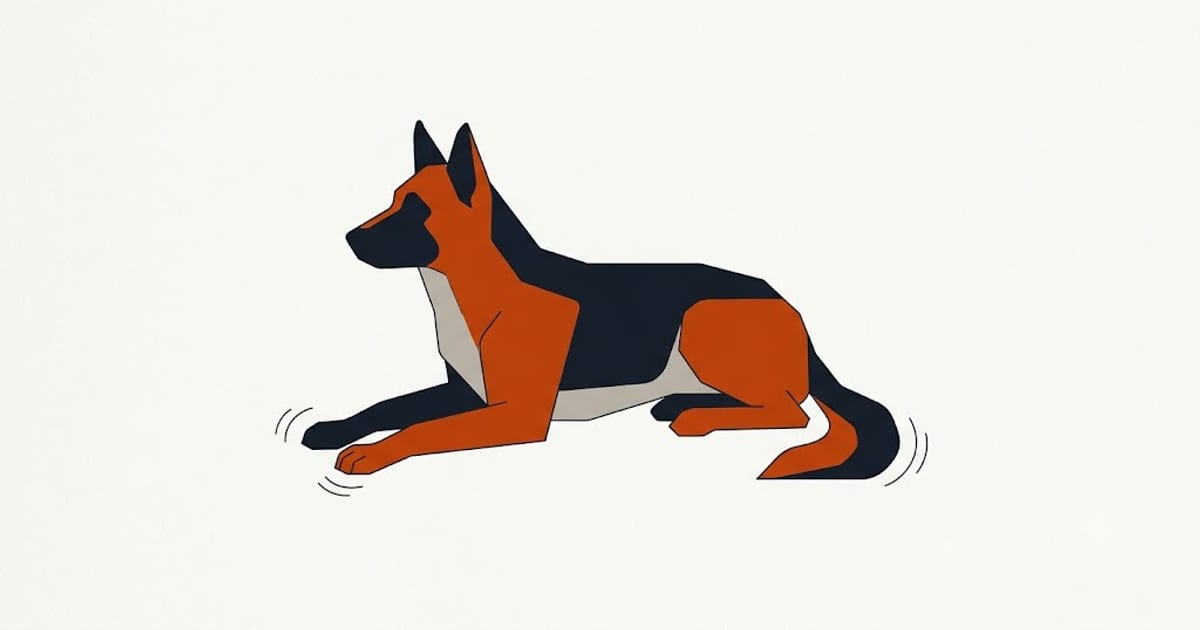
Dogs dream. Like people, they cycle through sleep stages, and during the dreaming stage the body's usual suppression of movement is incomplete — so paws paddle, whiskers move, and the dog makes small noises.
That is normal, common, and especially pronounced in puppies and older dogs.
What normal dream movement looks like
- Small, loose, irregular twitching — paws, face, tail.
- Soft whimpers, woofs or growls.
- Eyes moving under partly closed lids.
- Breathing that is faster but regular.
- Lasts seconds to a minute or two, on and off through a nap.
- The dog wakes if you speak to it, and behaves normally straight away.
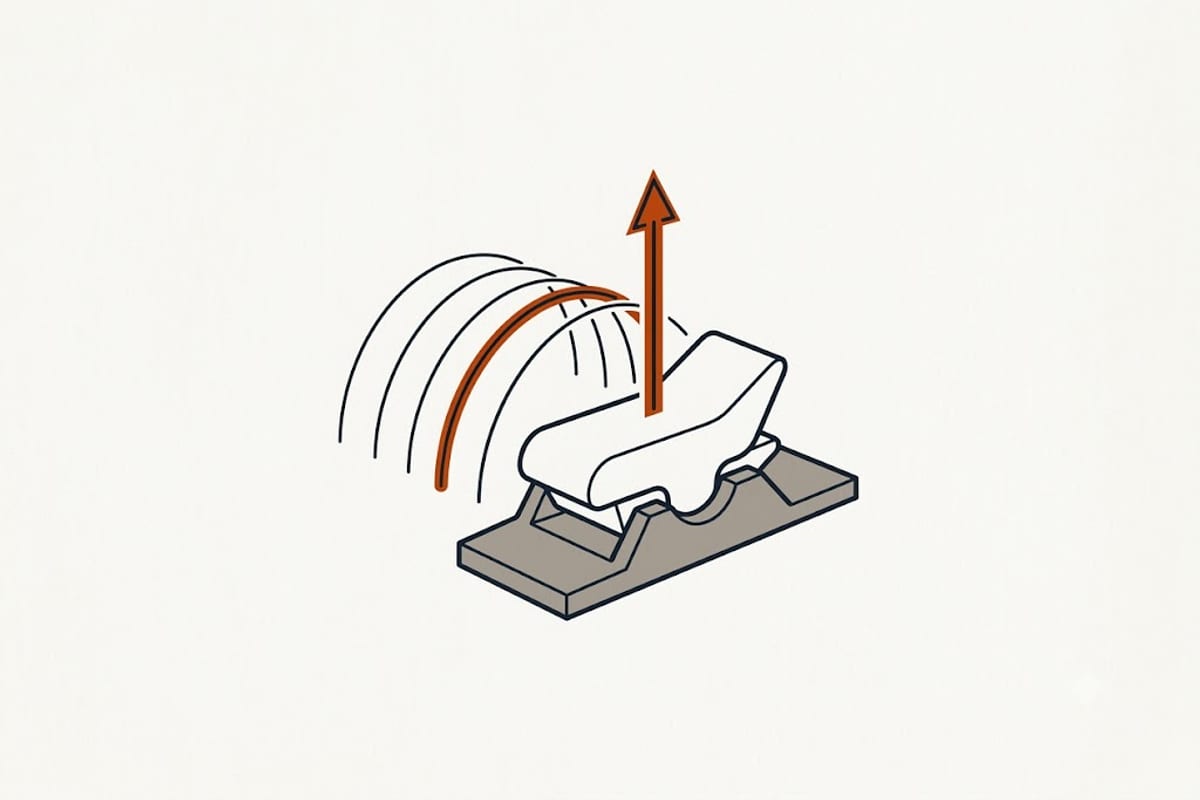
That last point does most of the work. A dreaming dog is asleep, and sleep can be interrupted.
What a seizure looks like
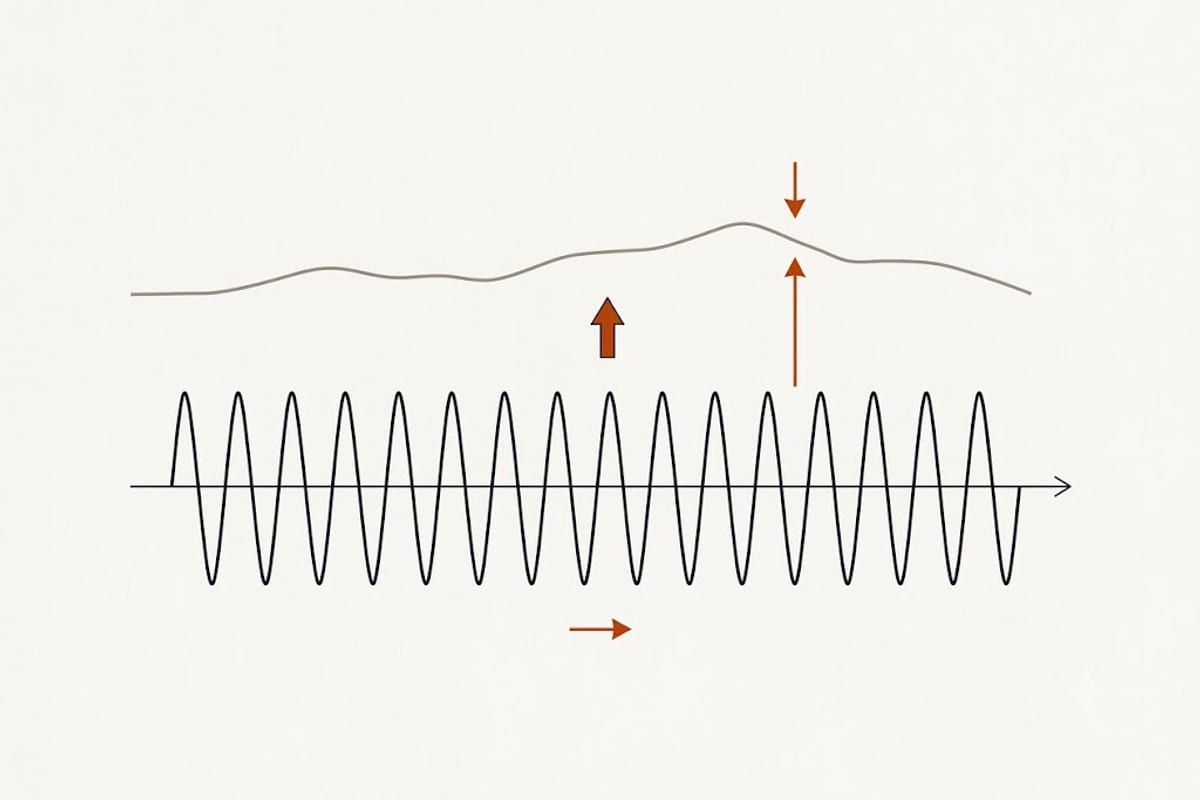
- Rigid, stiff limbs, often extended rather than paddling loosely.
- Rhythmic, forceful jerking rather than gentle twitching.
- Unresponsive — the dog cannot be woken or distracted.
- Eyes open, fixed, glassy, sometimes with the head pulled back.
- Drooling, chewing motions, or foaming.
- Loss of bladder or bowel control.
- Afterwards, a recovery period — disorientation, pacing, bumping into things, temporary blindness, extreme thirst or hunger. This can last minutes to hours and is one of the clearest distinguishing features.
A dreaming dog wakes up and is instantly itself. A dog that has seized is not itself for some time afterwards.
What to do during a seizure
- Do not put your hands near the mouth. Dogs cannot swallow their tongues, and you will be bitten without the dog intending it.
- Move furniture away rather than moving the dog, unless it is somewhere dangerous like a staircase.
- Note the time. Duration matters more than anything else you can observe.
- Dim the lights, keep it quiet, and stay back.
- Film it if you can. Vets rarely see the event, and video is genuinely diagnostic.
When it is an emergency
- A seizure lasting more than five minutes.
- More than one seizure in 24 hours.
- Seizures one after another without full recovery between.
- The first seizure a dog has ever had.
- A seizure with a high temperature, or after possible toxin exposure.
Those need emergency care, not a next-day appointment.
Twitching that is neither
- Hiccups, common in puppies, rhythmic and while awake.
- Shivering from cold, excitement or pain — while awake and responsive.
- Muscle tremors in the legs, particularly in older dogs, while standing.
- Whole-body tremors while awake can indicate toxin exposure and are worth a call.
The useful thing to record
If it happens again: how long, whether the dog responded to its name, and how it behaved for the ten minutes afterwards. Those three observations separate dreaming from seizing more reliably than any description of the movement itself.
This page helps tell two things apart. A dog that has had a seizure needs a vet, and a first seizure needs one promptly.
Puppies and old dogs twitch most
Puppies spend a much larger share of their sleep in the dreaming stage than adult dogs, and their nervous systems are still developing. A puppy that paddles, squeaks and jerks through most of a nap is doing something entirely normal, and it usually settles as it matures.
Older dogs twitch more for a different reason: the mechanism that suppresses movement during dream sleep becomes less effective with age. So a dog that never twitched much and does so noticeably at ten is showing a change that is common and, on its own, not concerning.
What is worth noting in an older dog is twitching that happens while it is awake, or movement that is accompanied by disorientation on waking. Those belong in the seizure discussion rather than in the dreaming one.
Waking a twitching dog
The old advice not to wake a sleeping dog has some sense behind it. A dog roused abruptly from deep sleep can snap reflexively before it is properly awake, and that is not aggression.
If you need to interrupt a dream, do it with your voice from a short distance rather than by touching. Most dogs surface within a couple of seconds, and the fact that they do is itself the reassurance you were looking for.