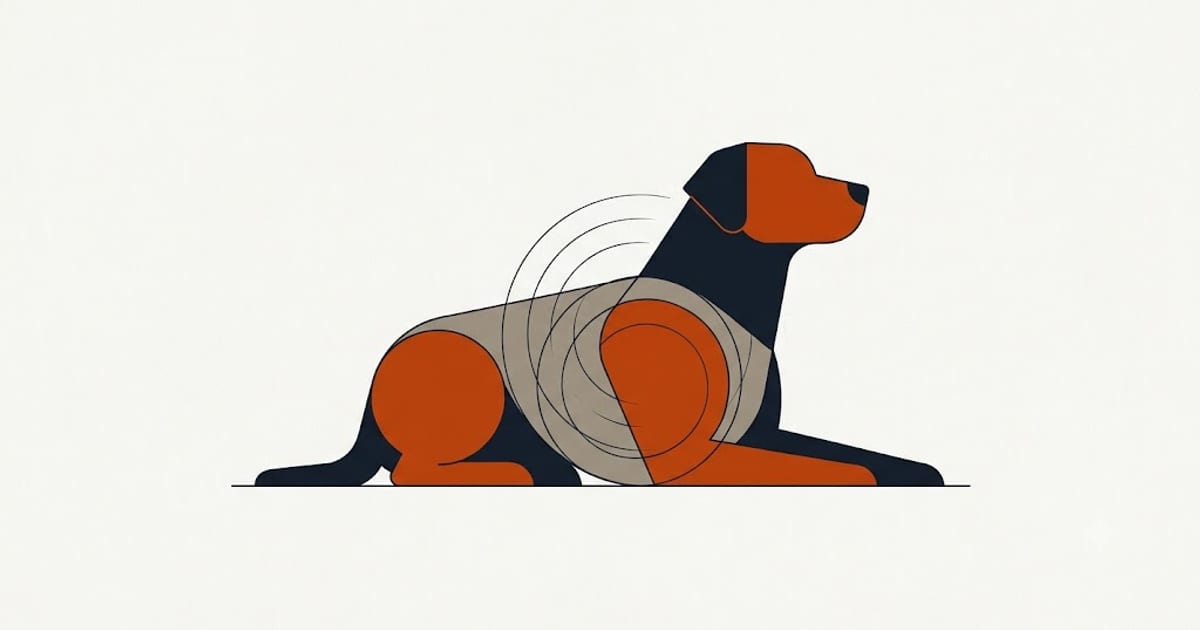
Gut sounds — the technical term is borborygmi — are produced by gas and fluid moving through the intestines. They happen constantly in every healthy dog, and sometimes they are loud enough to hear across a room.
Loudness alone is not the signal.
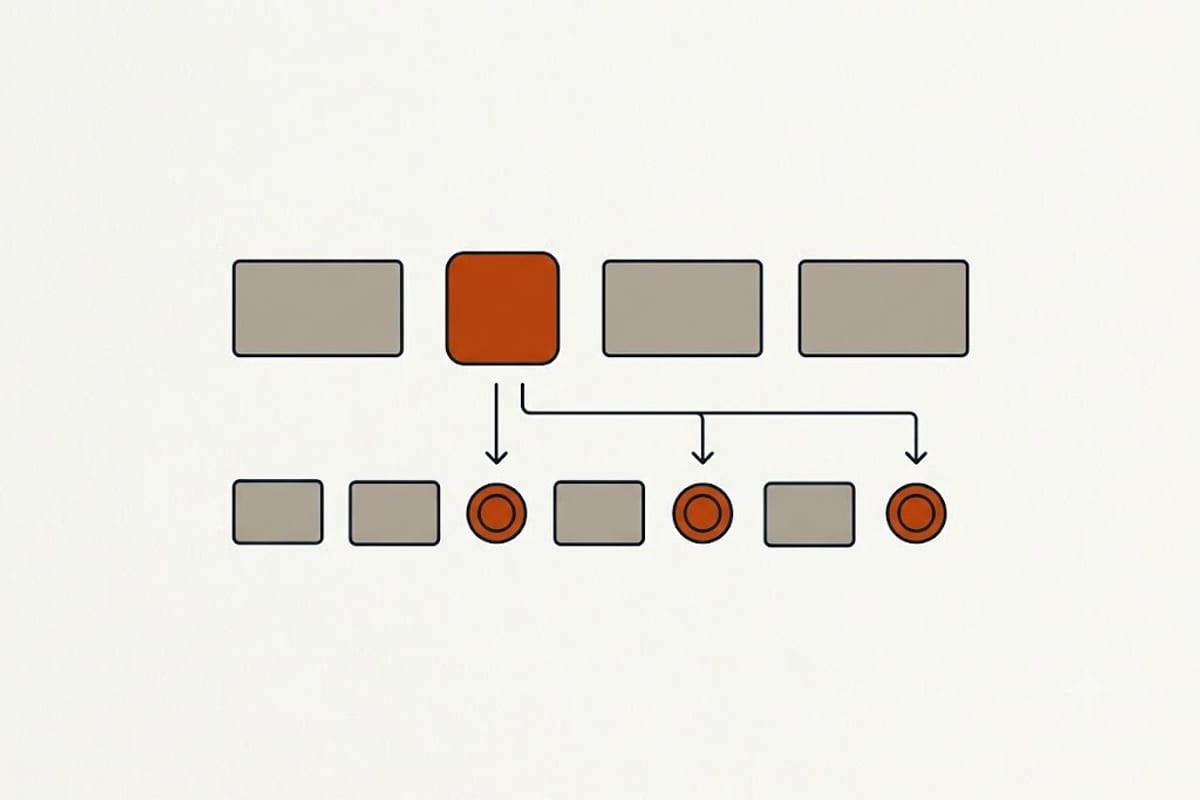
Normal reasons for loud gut noise
- An empty stomach. Most common before a meal, particularly if the gap between meals is long.
- Eating quickly, which swallows air.
- A recent food change, or a new treat.
- Normal digestion, an hour or two after eating.
- Mild excitement or anxiety, which changes gut motility.
A dog that is bright, eating, drinking and behaving normally with a noisy stomach is a normal dog.
When it matters
The noise combined with any of these:
- Vomiting, especially repeated.
- Diarrhoea, particularly with blood or mucus.
- Refusing food, which is significant in a dog that normally eats well.
- Lethargy or reluctance to move.
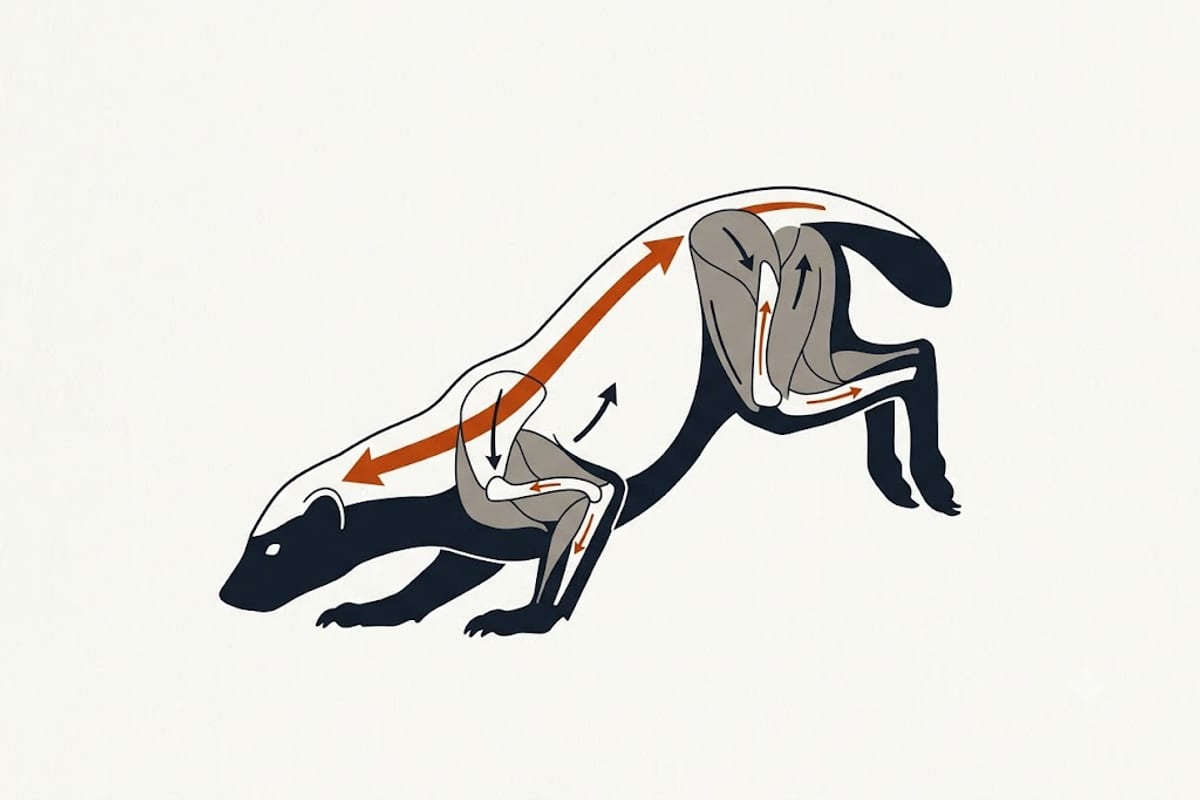
- A hunched posture, or the "praying" position — front end down, rear up. That is a classic abdominal pain posture.
- A visibly swollen or hard belly.
- Restlessness — repeatedly getting up, circling, and settling again.
The version that is an emergency
Unproductive retching, a distended abdomen, obvious distress, and a dog that cannot settle. In deep-chested breeds this can be gastric dilatation-volvulus, which is fatal within hours without surgery.
Gut noise may or may not be part of that picture. What makes it urgent is the retching-without-producing and the swollen abdomen, and it needs care measured in minutes.
The version vets worry about more than owners do
A silent abdomen. Gut sounds should be present. A gut that has gone quiet can indicate that motility has stopped — from an obstruction, from severe inflammation, or from other serious causes.
Owners rarely notice absence, because nobody listens to a dog that seems fine. But if a dog is unwell and its abdomen is silent, that is a more concerning finding than loud noise, and it is worth mentioning if you have noticed it.
Practical things that reduce ordinary noise
- Split the daily food into two or three meals rather than one, so the stomach is not empty for long stretches.
- Add a small late-evening portion if the noise and any morning bile vomiting are worst first thing.
- Slow the eating down with a slow-feeder bowl or by spreading food on a tray.
- Change foods gradually, over about a week.
- Cut back on rich treats and scraps, which are a common cause of a noisy, gassy gut.
What to tell the vet
- Whether it comes with any other sign — the list above.
- How long it has been going on.
- Any diet change, new treat, or scavenging in the last few days.
- Whether the dog is eating and drinking normally.
- Whether the belly is tense or painful to a gentle touch.
This page is about deciding whether a sound matters. A dog with gut noise plus any other sign of illness needs a vet, and a dog retching with a swollen abdomen needs one immediately.
Why an empty stomach is so noisy
When there is nothing to move, the intestines still contract, and gas and small amounts of fluid slosh through a largely empty tube. That produces more audible noise, not less — which is the opposite of what most owners assume.
It also explains why the noise is often loudest in the early morning and just before a meal, and why splitting the daily ration into more meals usually quietens it without changing how much the dog eats.
Diet changes and the two-week rule
A change of food produces gut noise, softer stools and wind for several days while the gut population adjusts. That is expected, and it is why the standard advice is to transition over about a week rather than switching in one meal.
If noise and loose stools are still present two weeks after a completed change, the food is probably not suiting the dog and that is worth discussing with a vet rather than persevering. Repeatedly switching foods every time there is a noise, however, guarantees a permanently unsettled gut — each change restarts the adjustment.