Wind in dogs comes from two places, and they need different responses.
Swallowed air
Air that goes in has to come out. Dogs that eat fast swallow a great deal of it, and so do flat-faced breeds, which cannot form a good seal around food and take in air with every mouthful.
This is why pugs, French bulldogs and boxers have the reputation they do. It is anatomy rather than diet, and changing the food will not fix it.
What helps:
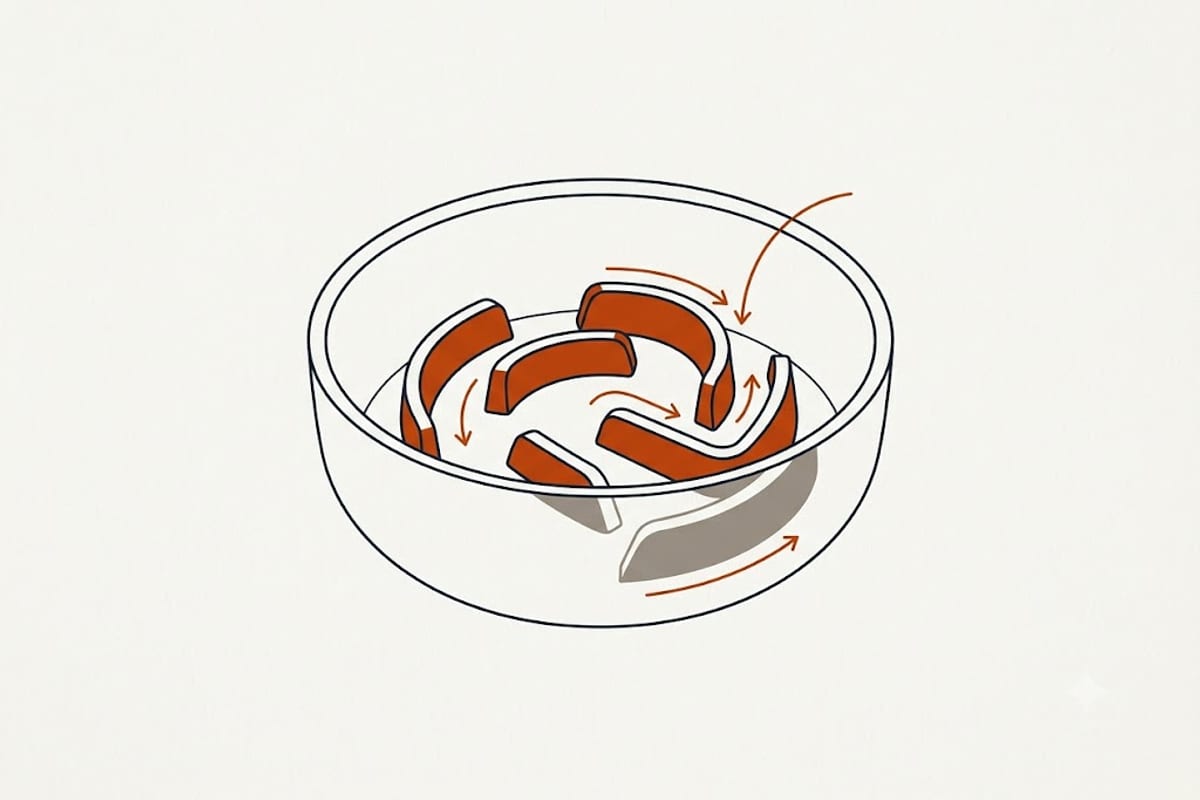
- A slow feeder bowl, or food spread across a flat tray.
- Smaller, more frequent meals.
- Feeding away from other dogs, since competition speeds eating up dramatically.
- A snuffle mat or food puzzle, which slows things and occupies the dog.
Fermentation in the gut
Ingredients that reach the large intestine undigested get fermented by bacteria, and that produces gas.
Common culprits:
- Sudden diet changes. Any change needs about a week, mixing increasing proportions.
- Dairy. Most adult dogs handle lactose poorly.
- Beans, peas, soy and some legumes, which appear in many grain-free foods.
- High-fibre or very rich foods, and table scraps.
- Poor quality protein sources, which are digested less completely.
If wind started within a fortnight of a food change, the food is the first place to look. Give any new food three to four weeks before judging it, since the gut population needs time to adjust.
Practical steps that usually work
- Slow the eating down. Cheapest and most effective.
- Stop all table scraps for two weeks and see what changes.
- Change food gradually if you are going to change it.
- Try a highly digestible diet — a vet can suggest one, and these are specifically formulated to leave less material to ferment.
- Two or three meals a day rather than one large one.
- A short walk after eating, which helps gut motility.
Give each change two to three weeks before deciding.
When it is a symptom
Wind on its own, in a bright dog eating normally, is a nuisance. Combined with any of these it is worth a vet appointment:
- Weight loss despite eating normally
- Persistent loose stools, or unusually large volumes
- Vomiting
- Very foul-smelling stools as well as wind
- A sudden dramatic increase with no diet change
- Discomfort — a hunched posture, restlessness, or a tense abdomen
Malabsorption conditions, parasites and pancreatic problems can all present this way, and they need testing rather than a food swap.
The emergency version
A distended, hard abdomen with unproductive retching and distress is not wind. In deep-chested breeds that picture can be gastric dilatation-volvulus, which is fatal within hours without surgery.
The distinguishing features are the swelling, the retching without producing anything, and obvious distress. A dog that is simply gassy is comfortable and behaving normally.
Rapid eating is a recognised risk factor for that condition as well, which is another reason slowing meals down is worth doing regardless of the smell.
Why grain-free food is often blamed
Grain-free diets replace grains with legumes — peas, lentils, chickpeas — and those ferment readily in the large intestine. A dog moved to a grain-free food and becoming noticeably gassy is a very common sequence, and it is a straightforward consequence of the ingredients rather than a sign of anything wrong.
That does not mean grain-free foods are bad. It means that if wind started when the food changed, the ingredient list is the first place to look, and a food with a different carbohydrate source is worth trying before assuming a medical cause.
Give any change three to four weeks. The gut population takes that long to settle, and judging a food after a week produces a permanent cycle of switching.
Keeping a simple record
If you are trying to work out what is responsible, write down what the dog eats for two weeks, including treats, chews and anything picked up on walks. Most owners are surprised by the total once it is written down, and the culprit is often something that did not feel like food — a daily dental chew, a handful of training treats, or one household member's habit of sharing.
That record is also the most useful thing to bring to a vet if the wind turns out to be a symptom rather than a nuisance.