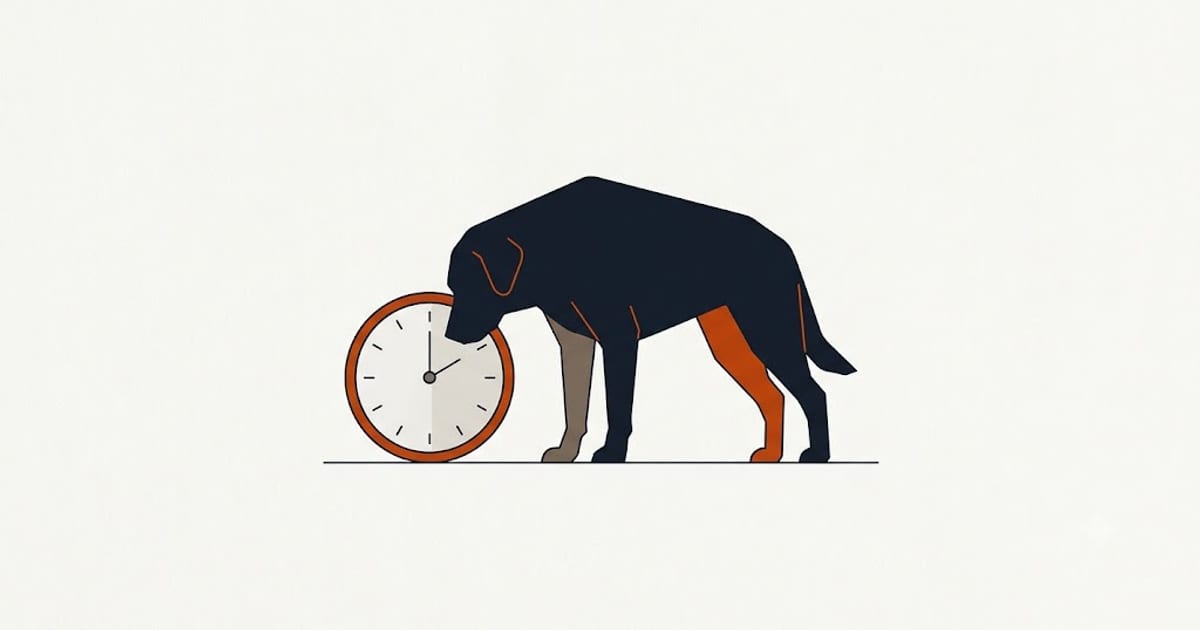
Owners call both "being sick". Vets ask which one it was, because the answer points at different parts of the body.
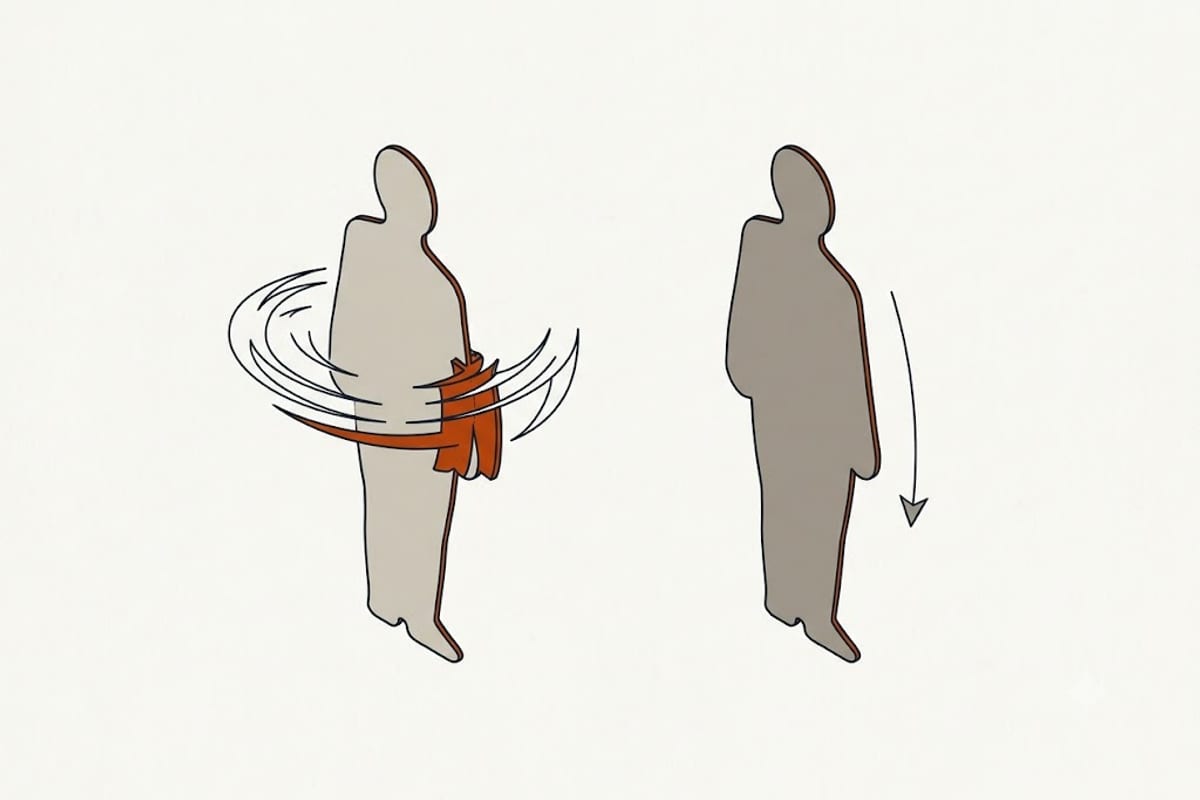
Vomiting
Active. The dog usually gives warning — drooling, lip licking, restlessness, repeated swallowing — then heaves with visible abdominal effort.
The material is usually partly digested, often with yellow or green bile, and sometimes comes some time after eating.
Vomiting points at the stomach, the intestines, or something systemic affecting them — kidneys, liver, pancreas, infection, toxins.
Regurgitation
Passive. No warning, no heaving. Food simply comes back up, often as the dog lowers its head or moves.
The material is usually undigested, sometimes tube-shaped, and typically comes soon after eating.
Regurgitation points at the oesophagus — the tube between mouth and stomach — and it has a different list of causes, including motility problems and, in some cases, an obstruction.
A dog that regurgitates repeatedly needs investigating even if it seems otherwise well, because it is not a stomach problem and it will not respond to stomach treatment.
Emergency — go now
- Unproductive retching — trying to vomit and producing nothing — especially with a swollen or hard abdomen and obvious distress. In deep-chested breeds this can be gastric dilatation-volvulus, which is fatal within hours.
- Blood in the vomit, fresh red or looking like coffee grounds.
- Repeated vomiting over a few hours, unable to keep water down.
- Pale, white or blue gums, or collapse.
- Known access to a toxin, medication, or a foreign object — a toy, a sock, a corn cob, a bone.
- A puppy vomiting repeatedly. They dehydrate very fast.
- Vomiting with visible pain, a hunched posture, or unwillingness to move.
Vet appointment within a day
- Vomiting continuing beyond 24 hours.
- Vomiting with diarrhoea, particularly in a small or elderly dog.
- Any vomiting with reduced appetite or lethargy.
- Recurring episodes over weeks, even if each one seems mild.
- Vomiting in a dog on medication such as NSAIDs or steroids.
- Weight loss alongside it.
Reasonable to watch
A single episode in an adult dog that is otherwise bright, drinking, and back to normal within a few hours.
- Keep water available. Do not withhold water.
- Hold off food for a few hours, then offer small bland meals.
- Return to normal food over two to three days.
- Avoid rich treats for a week after.
Yellow foam in the morning
A recognisable pattern: an empty stomach overnight, bile irritating the lining, vomiting shortly before or after breakfast. It often responds to a small late-evening meal, moving the gap between meals.
Worth mentioning to a vet if it is frequent, because it can also accompany other conditions — but on its own, in a well dog, it is a common and manageable pattern.
What to tell the vet
- Vomiting or regurgitation — the distinction above.
- How many times, over what period.
- What it looked like. A photograph is genuinely useful.
- Anything eaten in the previous two days, including scavenging, treats, and food changes.
- Any access to toys, bones, socks, or bins.
- Medications and worming dates.
This page is about deciding how urgent something is. It is not a diagnosis, and a dog that is repeatedly sick needs a vet.
Why the timing relative to eating is worth noting
If you can say how long after a meal it happened, that narrows things considerably.
Immediately, undigested — usually regurgitation, or eating too fast. Slow-feeder bowls make a real difference to the second.
Within a few hours, partly digested — stomach.
Many hours later, still containing recognisable food — food is not leaving the stomach at a normal rate, which is worth investigating rather than watching.
Early morning, yellow foam, empty stomach — the bile pattern described above.
Those four descriptions come from the same owner observation, and they point in genuinely different directions.
Eating too fast is a real cause
A dog that inhales a meal and brings it straight back, undigested, in a neat tube, with no distress and immediate interest in eating again, is usually not ill. It ate too fast.
Slow feeders, spreading food on a flat tray, or splitting the meal into smaller portions all help. It is worth solving rather than tolerating, because rapid eating is also one of the risk factors associated with bloat in large deep-chested breeds.