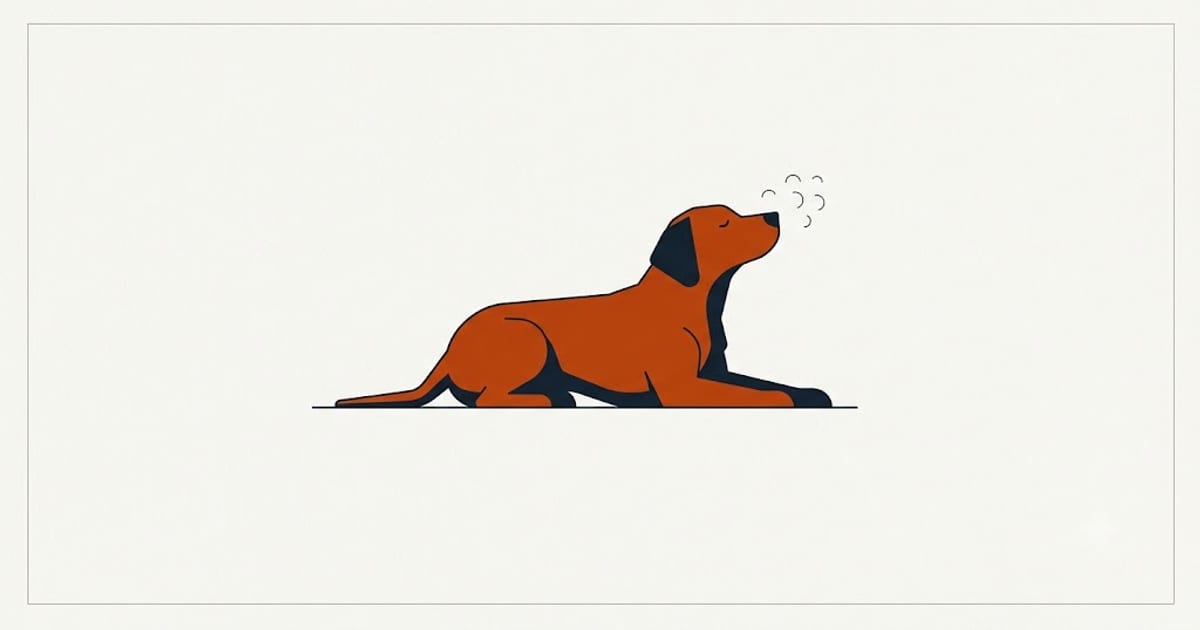
Snoring is airflow moving past tissue that vibrates, and in dogs the amount of tissue relative to the space available varies enormously by breed.
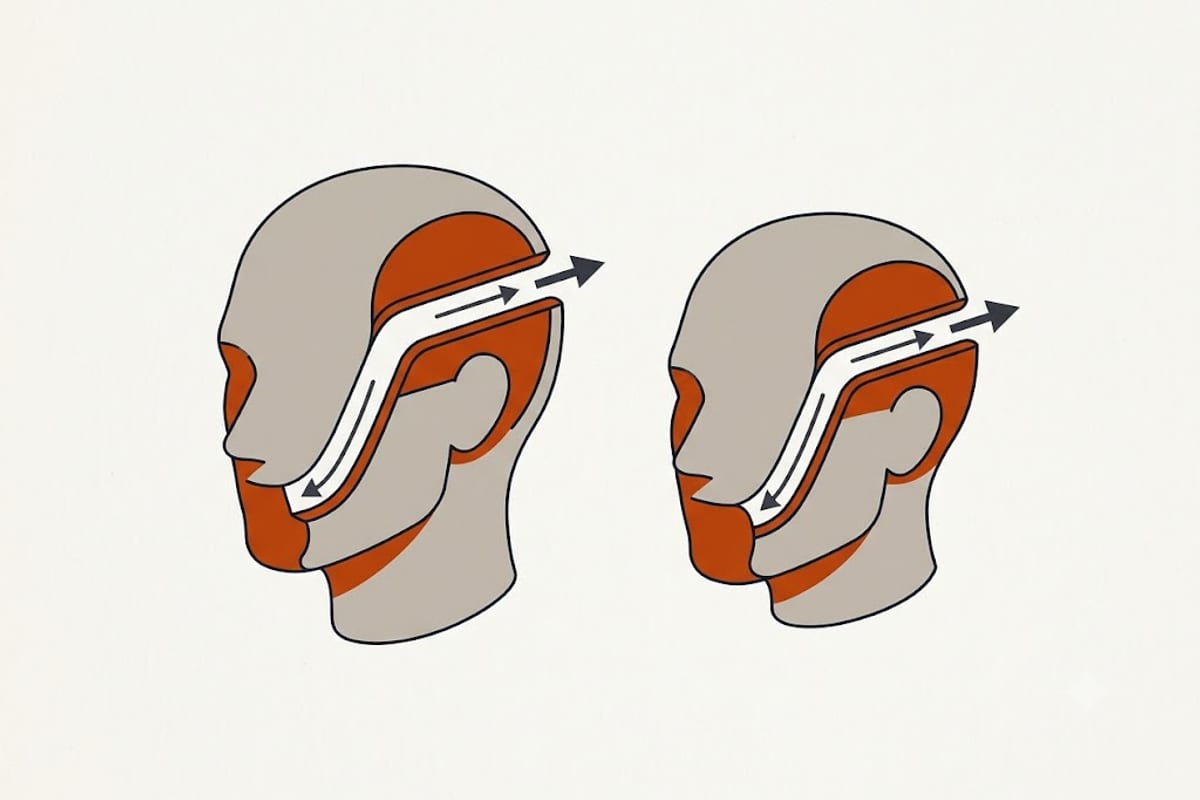
Why flat-faced breeds snore
Selective breeding for a shortened muzzle did not shorten the soft tissue inside it to match. Pugs, French and English bulldogs, boxers, shih tzus and similar breeds have roughly the same soft palate and nasal tissue as a longer-nosed dog, compressed into far less space.
The result is a narrowed airway, and the collection of consequences is recognised as brachycephalic obstructive airway syndrome. Snoring is the mildest and most visible part of it.
For those breeds, snoring is not so much normal as expected — and that distinction matters, because a lifetime of noisy breathing in a flat-faced dog is still worth discussing with a vet. The condition is treatable surgically in many cases, and the dogs that have it done frequently show a marked change in energy afterwards.
When snoring is genuinely nothing
A dog of any breed can snore occasionally because of sleeping position, particularly on its back with the head bent. So can a dog sleeping deeply, a dog that has been very active that day, or one sleeping in a warm room.
A dog that has snored the same way for years, is otherwise fit, exercises normally and breathes silently when awake, is very unlikely to have a problem.
What changes the picture
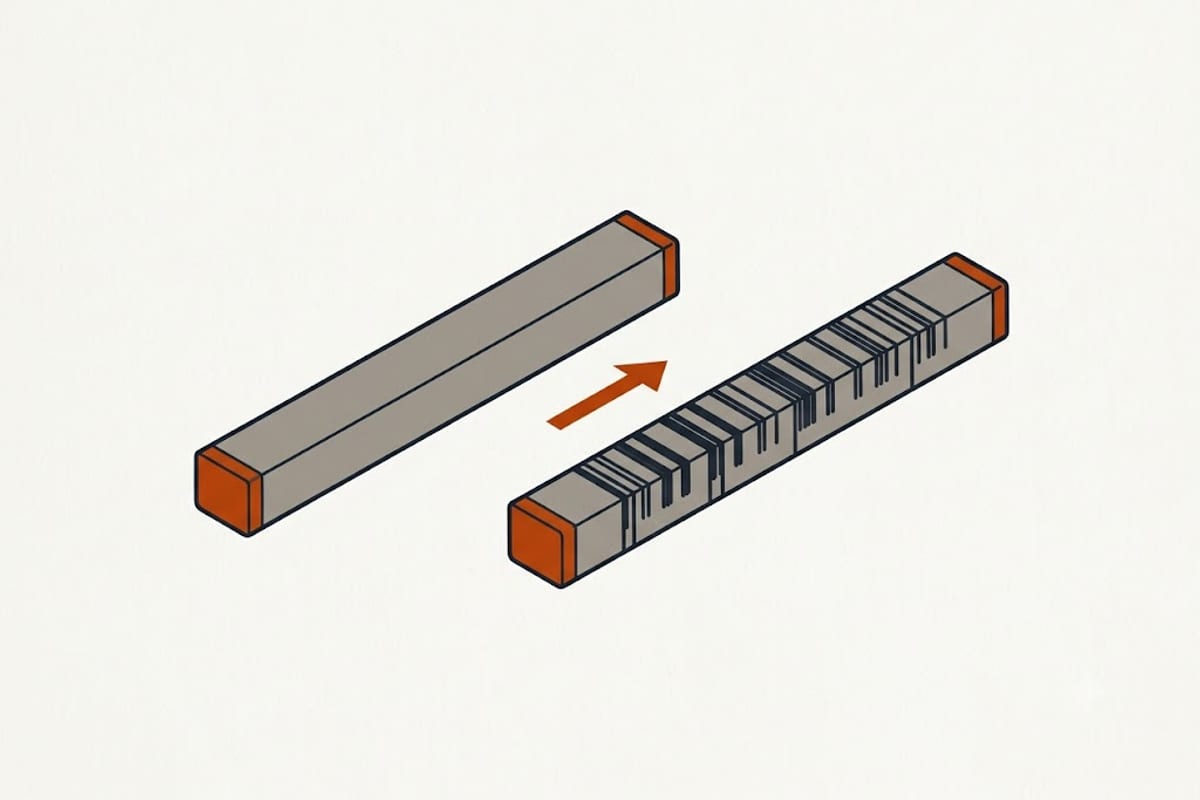
The single most useful question is whether the noise is present while awake. Snoring during sleep involves relaxed tissue. Noisy breathing while awake means the airway is restricted even at normal muscle tone, and that is a different and more significant finding.
Beyond that, the changes worth acting on are:
A dog that has started snoring recently, particularly one that never used to. Weight gain is the most common reason and it is reversible; nasal masses, foreign bodies and dental disease affecting the nasal passages are the reasons to check rather than assume.
Snoring on one side only, or with discharge from one nostril, which points at something local rather than general.
Noise that comes with exercise intolerance — tiring quickly, needing to stop, or a dog that cannot settle after mild activity.
Blue or grey gums or tongue at any point, which is an emergency.
Choking, gagging or retching sounds, especially after eating or drinking.
Collapse or fainting, at any time.
Weight is the lever most owners have
For a dog whose snoring has worsened gradually, weight is by far the most common contributor and the only one an owner can change directly. Fat deposited around the neck and chest narrows the airway further, and in flat-faced breeds it compounds an anatomy that was already marginal.
The improvement from weight loss in these dogs is often larger than people expect, and it happens before the dog reaches an ideal weight rather than only at the end.
Heat is a separate danger
Any dog whose airway is restricted has a reduced ability to cool itself, because panting is the primary cooling mechanism and it depends on moving air freely. Flat-faced breeds overheat faster than other dogs and tolerate less, and heatstroke in them can develop in conditions another dog would manage comfortably.
That is worth knowing as a practical matter in summer, in cars, and on walks — and it is one of the reasons the snoring is worth taking seriously rather than treating as a quirk.
Recording it for a vet
Breathing noise is one of the things vets most often cannot hear during a consultation, because a dog in a clinic is alert, standing, and often panting from stress. A short video taken at home — one while the dog is asleep and one while it is resting awake — is genuinely useful, and it is the kind of evidence that changes a conversation from description to observation.
Worth capturing alongside it: how the dog breathes after a normal walk, how long it takes to settle, and whether it sleeps in unusual positions such as with its head propped up or its neck extended. Dogs with restricted airways often find their own workarounds, and those positions are informative.