The feeding chart printed on a bag of dog food gives one number per weight band. It is a starting point, not an answer, and it is built from a calculation that has more inputs than weight alone.
Knowing the calculation is useful for one reason: it shows you which dogs the bag chart gets wrong, and by roughly how much.
The two-step calculation
Veterinary nutrition uses a resting figure first, then multiplies it.
Step one — resting energy requirement. This is what the dog burns doing nothing, and it does not scale in a straight line with weight. A dog twice as heavy does not need twice the food.
RER = 70 × (body weight in kg)^0.75
The exponent is the part that matters. It is why small dogs need more food per kilogram than large dogs, and why scaling a Labrador's portion down by weight overfeeds a terrier.
Step two — multiply for the individual dog. The resting figure is multiplied by a factor for age, neutering and activity. Commonly used factors:
| Dog | Factor |
|---|---|
| Neutered adult | 1.6 |
| Intact adult | 1.8 |
| Weight loss needed | 1.0 |
| Weight gain needed | 1.2 – 1.8 |
| Puppy, under 4 months | 3.0 |
| Puppy, 4 months to adult | 2.0 |
| Active or working | 2.0 – 5.0 |
The result is daily calories. Divide by the calories per cup printed on the bag — usually shown as kcal/cup or kcal/kg — to get the amount to serve.
Why the bag chart is often wrong for a specific dog
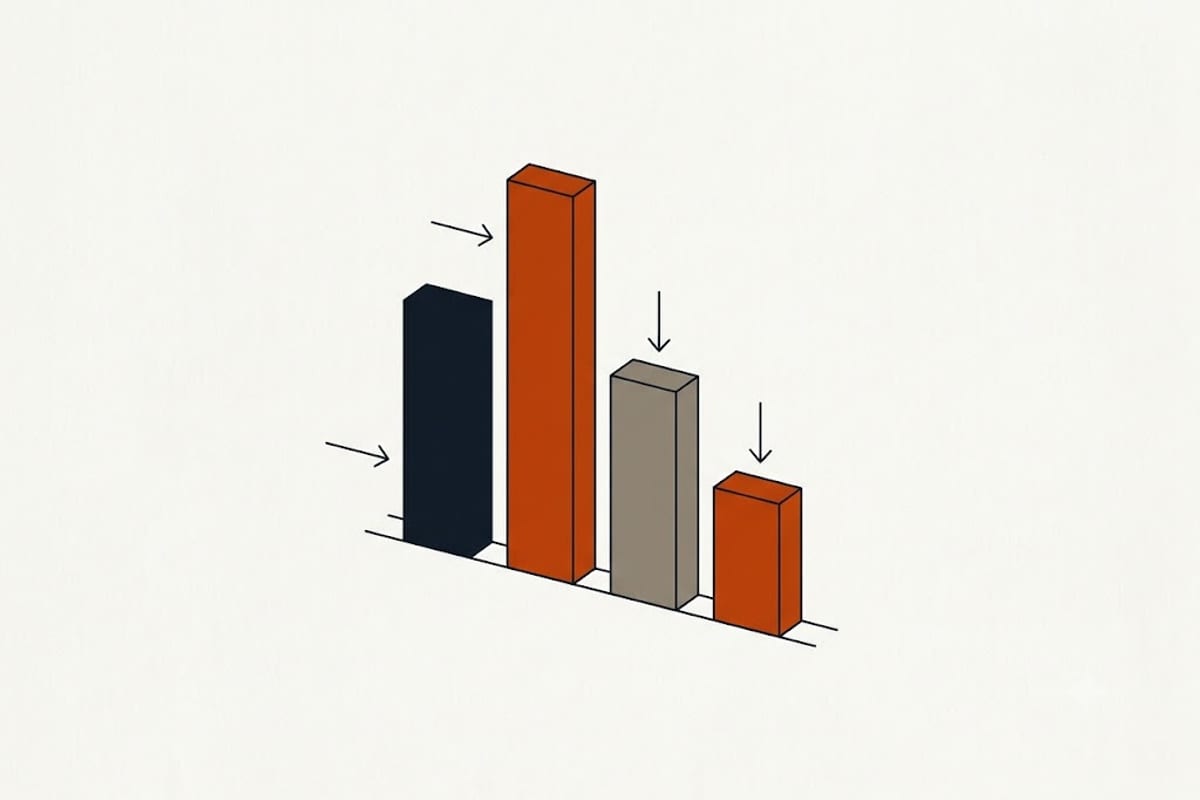
Look at the factor table and the reason becomes obvious. A neutered adult and an intact adult of the same weight differ by about 12%. A puppy and an adult of the same weight differ by nearly double. A bag chart that lists one number per weight band cannot express that.
The dogs the chart misses hardest:
- Neutered dogs, who need meaningfully less than the chart's assumption and gain weight slowly on it.
- Small breeds, because of the 0.75 exponent.
- Older, quieter dogs whose activity has dropped but whose weight has not yet.
- Genuinely working dogs, who need far more than any chart prints.
The number that overrides the calculation
The calculation is an estimate. Body condition is the measurement.
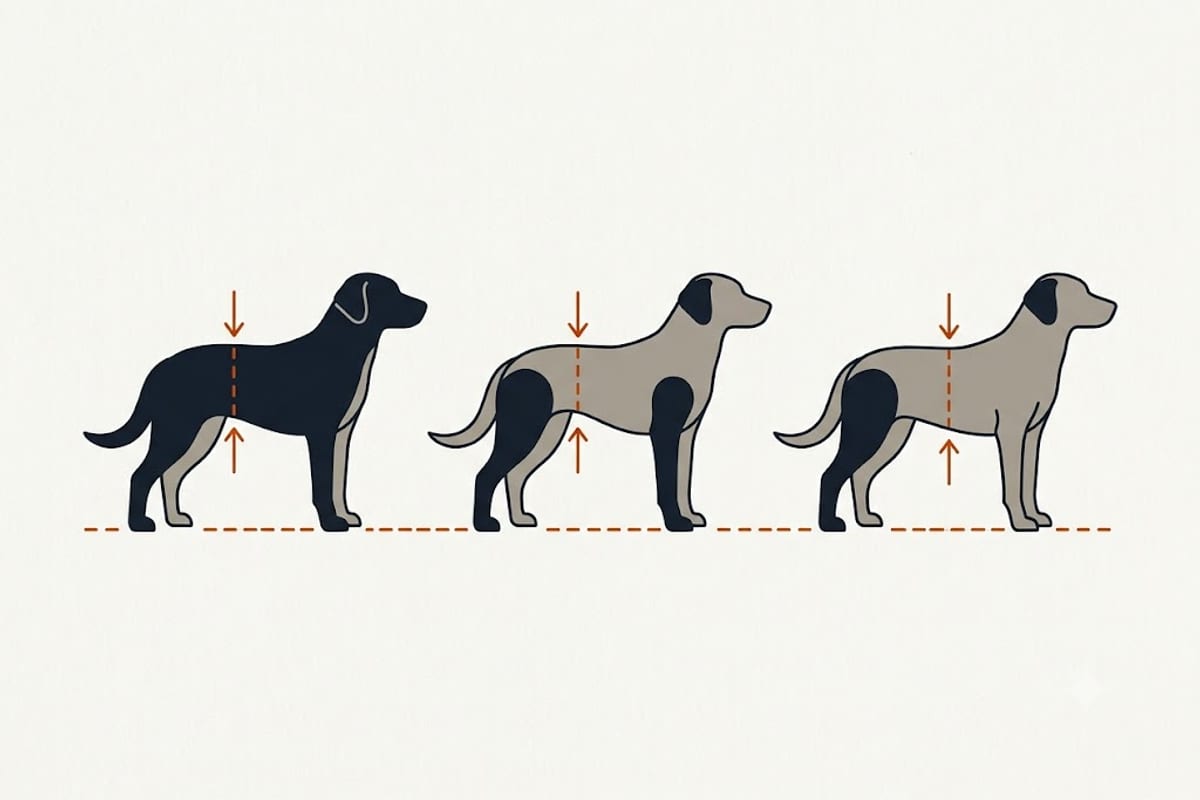
Run your hands along the dog's side. You should feel ribs easily under a thin layer, the way you feel the back of your own hand — not through a pad, and not standing out sharply. Seen from above there should be a visible waist behind the ribs; from the side, a tuck upward toward the hind legs.
If the calculation and the dog disagree, the dog is right. Adjust by about 10% and give it four weeks — body condition changes slowly and daily weighing tells you nothing but noise.
Practical notes
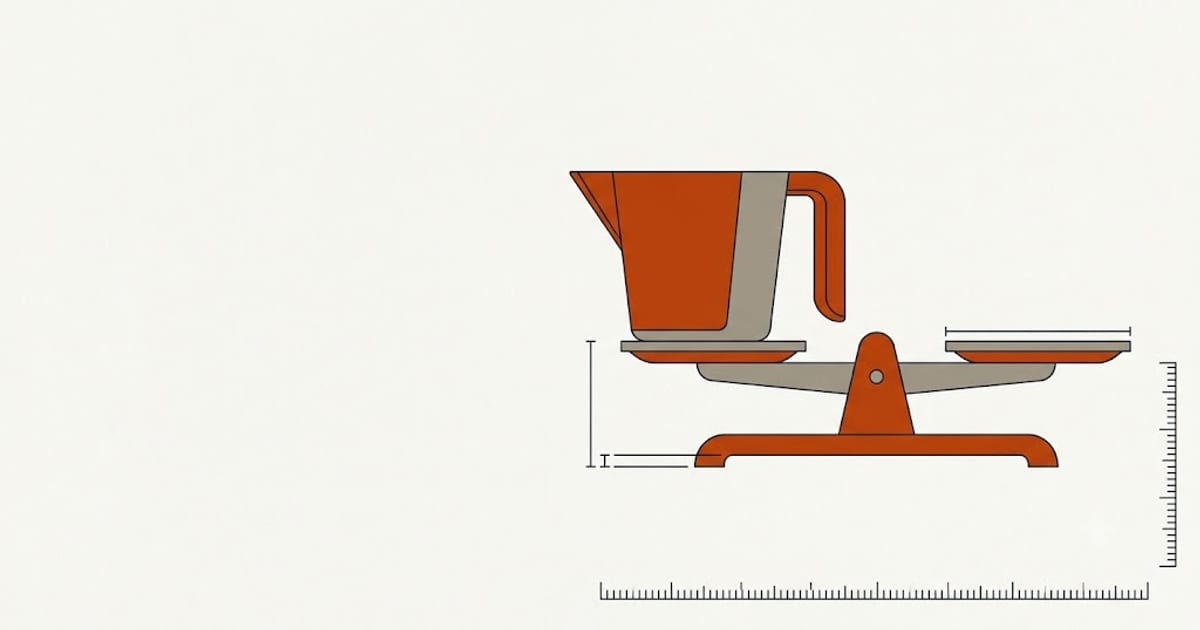
- Weigh the food rather than scooping it. Cup volumes vary by more than most people expect between kibble shapes; a kitchen scale removes the error entirely.
- Count the treats. Treats and chews should stay under roughly 10% of daily calories. They are the most common reason a correctly calculated portion still leads to weight gain.
- Split the day. Two meals rather than one is standard practice for adult dogs, and puppies eat more often than that.
- Change food gradually, over about a week, mixing increasing proportions of the new food.
When the amount is not the question
A sudden change in appetite is a different problem from the wrong portion size. A dog that stops eating for more than a day, eats normally but loses weight, or becomes suddenly ravenous, is telling you something the calculation cannot answer.
This page explains how feeding amounts are calculated. It is not veterinary advice, and it does not cover dogs with medical conditions, pregnancy, or prescription diets — those change the numbers, and your vet sets them.