A 50 lb dog is about 22.7 kg. Running the standard veterinary calculation gives a daily calorie figure, and then the number of cups depends entirely on which food you use.
The calculation
Resting energy requirement:
RER = 70 × (22.7)^0.75 ≈ 727 kcal/day
That is what the dog burns doing nothing. It is then multiplied by a factor for the individual:
| Dog | Factor | Daily calories |
|---|---|---|
| Neutered adult | 1.6 | ≈ 1,160 |
| Intact adult | 1.8 | ≈ 1,310 |
| Needs to lose weight | 1.0 | ≈ 730 |
| Older, low activity | 1.4 | ≈ 1,020 |
| Active or working | 2.0 – 5.0 | 1,450 and up |
Most 50 lb pet dogs — neutered, walked an hour or so a day — land somewhere around 1,000 to 1,200 calories a day.
Converting calories to cups
This is where bag charts mislead, because foods differ enormously in energy density.
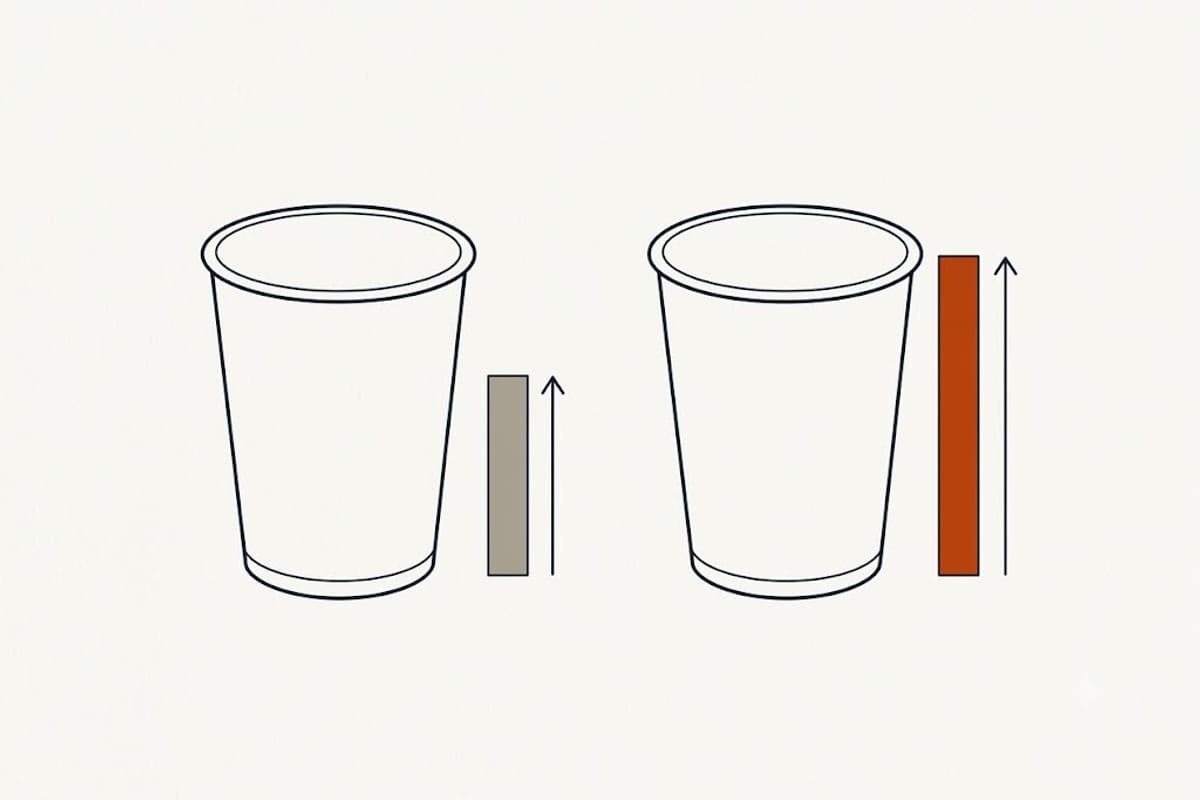
Look on the bag for kcal/cup or kcal/kg. Typical dry dog foods run roughly 320 to 500 kcal per cup — a difference of over 50%. So the same dog on two different foods needs quite different volumes, and a cup measurement carried over from an old bag can overfeed substantially.
At 1,100 calories a day:
- A food at 350 kcal/cup → about 3⅛ cups
- A food at 420 kcal/cup → about 2⅔ cups
- A food at 500 kcal/cup → about 2¼ cups
Split across two meals.
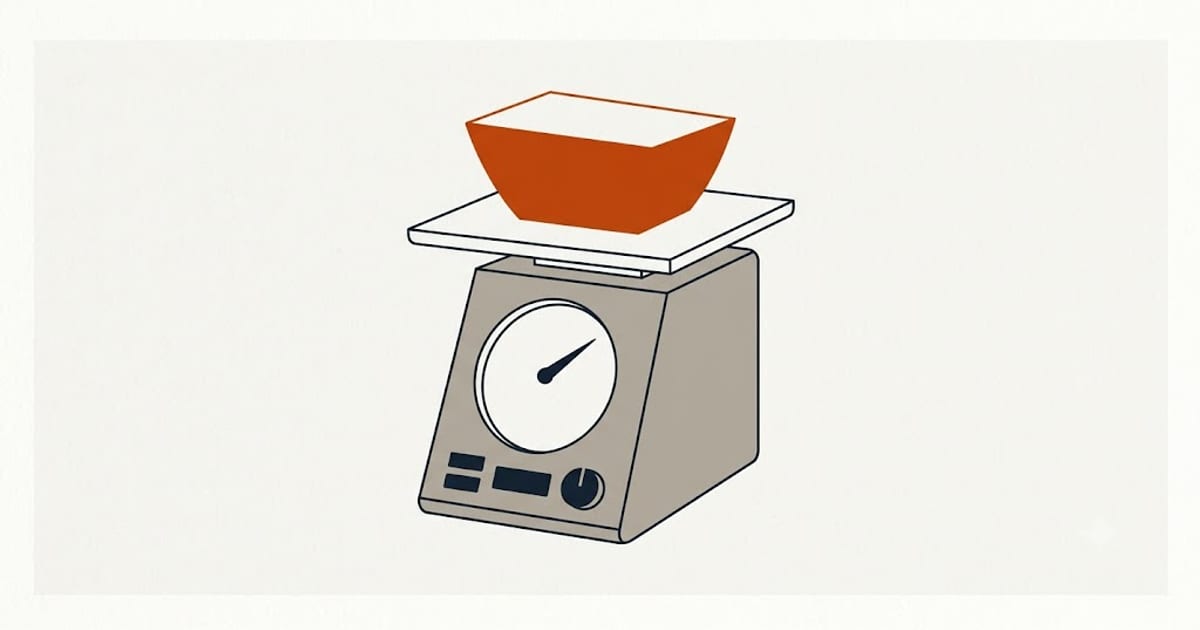
Weigh rather than scoop. Kibble shapes pack differently, and the same cup of two foods can differ by 20% in mass. A kitchen scale removes the error and takes no longer once you know the number of grams.
Then check the dog
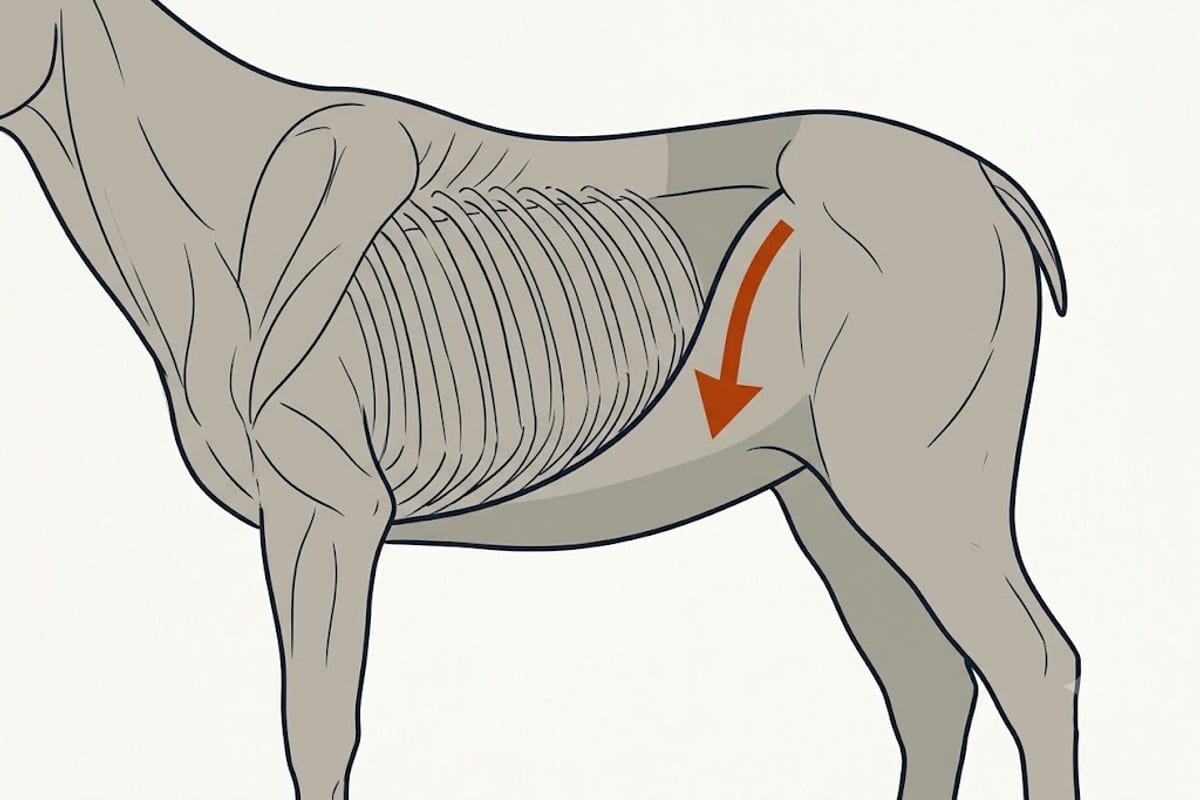
The calculation is an estimate; body condition is the measurement.
Run your hands along the dog's sides. You should feel ribs easily under a thin covering — similar to feeling the back of your own hand — without them being visually prominent. From above, a visible waist behind the ribs. From the side, a tuck upward toward the hind legs.
If the calculation and the dog disagree, adjust by about 10% and give it four weeks. Body condition changes slowly, and weighing daily produces noise rather than information.
Treats count
Treats, chews and training rewards should stay under roughly 10% of daily calories — for this dog, about 100 to 120 calories. A single large dental chew can be most of that, and a handful of training treats through a session adds up faster than most people expect.
Overfeeding despite a correctly calculated portion is nearly always treats, and it is the most common reason a careful owner has an overweight dog.
When the number is different
Puppies, pregnant or nursing dogs, working dogs, and dogs with medical conditions all sit outside this. Puppies in particular use a much higher multiplier and need feeding more often.
Prescription and weight-loss diets have their own figures set by a vet, and those override anything calculated here.
Wet food, raw and mixed feeding
The same calorie target applies; only the conversion changes. Wet food is mostly water, so the calorie density per gram is far lower — typically 70 to 120 kcal per 100 g, against 350 to 400 kcal per 100 g for dry.
That means a dog fed entirely on wet food eats a much larger mass for the same energy, which surprises people switching over and leads to accidental underfeeding.
For mixed feeding, work in calories rather than in portions. Decide the daily total, then split it — for example 70% from dry and 30% from wet — and calculate each part from its own label. Feeding "a normal scoop plus a pouch" is how a carefully calculated diet quietly becomes 30% too much.
Changing the amount
Adjust in steps of around 10% and hold each step for three to four weeks. Larger jumps produce digestive upset, and shorter windows do not give body condition time to change.
Weigh the dog at the same point in the day when you do check — before a meal is the easiest to repeat — because a full stomach and bladder are a meaningful fraction of a small dog's weight and enough to confuse a weekly trend.