Dogs do not sweat through their skin the way people do. They shed heat mainly by evaporating moisture from the tongue, mouth and airway, which is what panting is for.
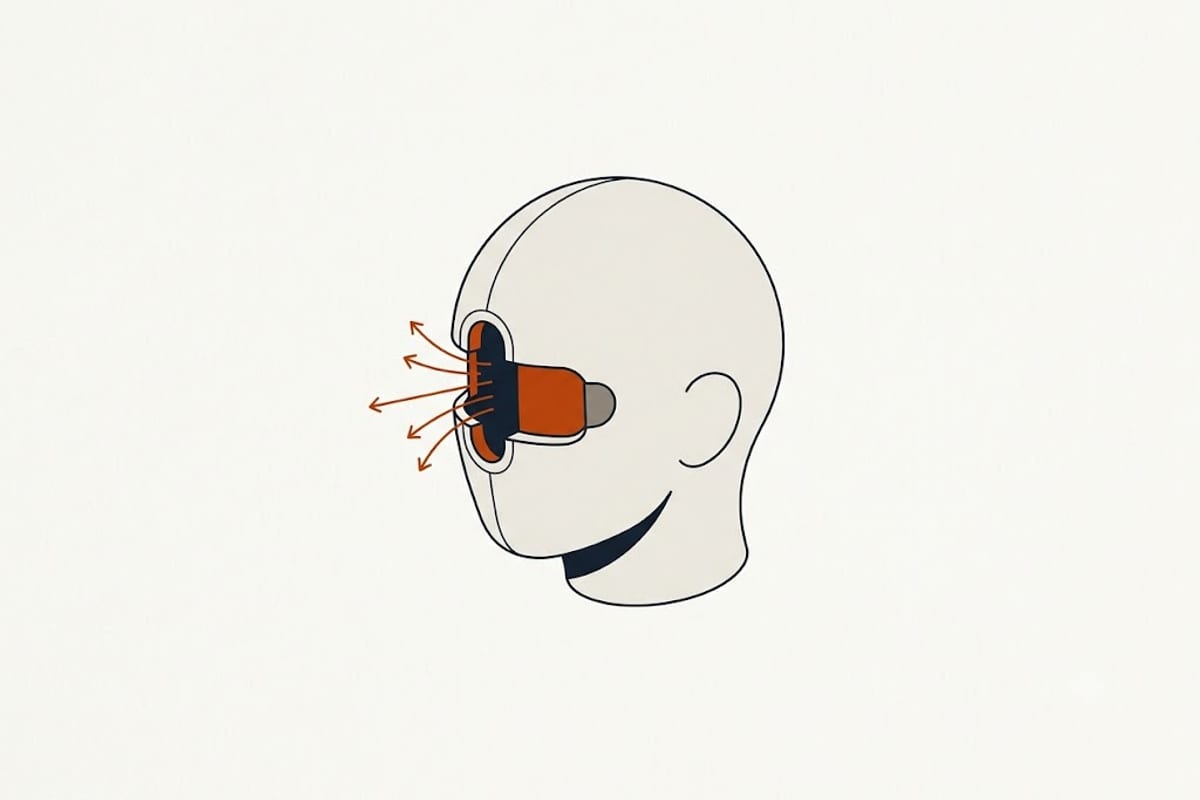
Puppies do it more than adults, and usually for ordinary reasons.
Why puppies pant more
- A higher metabolic rate. They generate more heat per kilogram than an adult dog.
- A worse surface-area-to-mass ratio for cooling, and less developed regulation.
- They play in bursts. Puppy activity is short, intense and repeated, and each burst produces heat.
- Everything is new. Excitement, novelty and mild stress all produce panting that has nothing to do with temperature.
Panting during and after play, in a warm room, or in a car, that settles within five to ten minutes of rest in a cool place, is normal.
Emergency — go now
Heatstroke kills quickly and puppies are at higher risk than adults. Any of these means immediate veterinary care:
- Panting that is frantic, noisy, and does not settle with rest and shade.
- Bright red or very pale gums, or gums that feel tacky.
- Drooling thickly, vomiting, or diarrhoea alongside heavy panting.
- Wobbliness, confusion, collapse, or unresponsiveness.
- Panting after being in a car, a conservatory, or direct sun, even briefly.
While arranging transport: move to shade, offer small amounts of cool water, and wet the coat with cool — not ice-cold — water, particularly the belly, armpits and groin. Cooling too fast causes its own problems.
Flat-faced breeds — pugs, French bulldogs, boxers — overheat far faster and tolerate much less. For them the threshold for concern is lower.
Worth a same-day call
- Panting at rest, in a cool room, for no obvious reason.
- Panting with coughing, noisy breathing, or a bluish tinge to the gums or tongue.
- Sudden onset in a puppy that was fine an hour ago.
- Panting with shivering, hiding, or a hunched posture — that combination often means pain rather than heat.
- Panting after any possible access to a toxin, human medication, or an unusual food.
Normal in context
- After play, settling with rest.
- In a warm room or a warm car, resolving when it cools.
- When excited — visitors, the lead coming out, a new place.
- Briefly when stressed — the vet, a bath, fireworks — and settling when the trigger ends.
- During deep sleep, occasionally, along with twitching and soft noises.
Counting breathing rate is more useful than watching
At rest or asleep, count how many times the chest rises in fifteen seconds and multiply by four. For a resting puppy, roughly 15 to 40 breaths a minute is typical.
The number matters less than the trend. A resting rate that has climbed over days, or that stays high in a cool room, is worth reporting. It is also a genuinely useful figure to give a vet over the phone.
This page describes when panting is expected and when it is not. Heatstroke is an emergency measured in minutes, so when in doubt, call.
Panting that is really about pain
Pain produces panting that has nothing to do with temperature, and it is easy to miss in a puppy because puppies pant anyway.
The distinguishing picture is panting at rest, in a cool room, combined with something else: a reluctance to be picked up, hiding, a hunched or tucked posture, restlessness that will not settle, or a puppy that keeps changing position. Puppies rarely limp obviously with abdominal or spinal pain, so the absence of a limp does not rule pain out.
A puppy that has been panting at rest for more than an hour with no heat explanation is worth a call the same day, not the next.
Building a normal baseline while everything is calm
The most useful thing you can do before there is a problem is to know what this particular puppy looks like when it is fine. Count the resting breathing rate a few evenings in a row while it sleeps, and note roughly how long it takes to stop panting after a normal play session.
Two numbers on a note in your phone turn a vague worry into a specific observation, and a specific observation is what makes a phone triage call useful. "Resting rate is usually 25 and tonight it is 50" is a far stronger reason to be seen than "he seems to be panting a lot".